
How Traffic Warrants Work in Grady County
Every Grady County traffic case starts at the court printed on the citation. Tickets written inside Cairo go to Cairo Municipal Court, while Whigham ordinance and traffic matters go to Recorder's Court. Other traffic-related criminal charges may sit in State Court. Miss a setting, and the court can enter a failure to appear and sign a bench warrant. Georgia's own public paperwork says "bench warrant," not "capias pro fine." A payment page is not a warrant list. It will happily take an eligible citation, then lock once the court date passes. At that point only the clerk can tell you what the court requires next: payment, a new setting, an appearance, or bond. And only the issuing court can confirm a recall.
Cairo Traffic Citations Route Through City Hall
Cairo's citation page sends payments to the Municipal Court Clerk at City Hall, 119 North Broad Street, Cairo, Georgia 39828, reachable at (229) 377-1722 on weekdays from 8:00 a.m. to 4:00 p.m. Do not bring the ticket to the police department. Officers cannot take payment. The linked Government Window FAQ warns that a missed date may mean calling the clerk, and a payment plan requires a court appearance. The vendor also wants digits only when you type a license number. That is just an input rule. It says nothing about warrant status in Grady County.
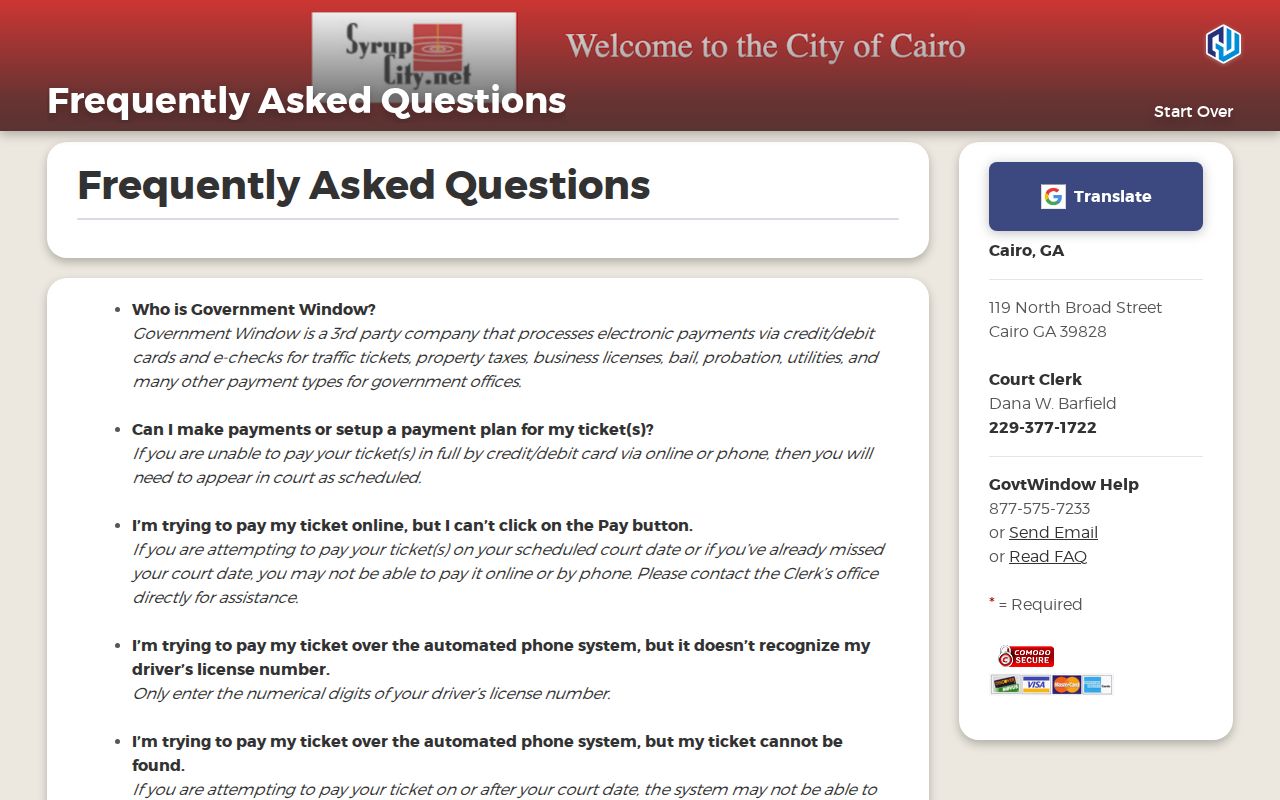
It supports a payment route, not a public Grady County traffic warrant roster.
Grady County Traffic Warrant Checks
Georgia keeps no statewide citation database, and Grady County posts no public traffic-warrant roster. So a warrant check goes through the issuing office, and an empty vendor search result proves nothing.
- Read the citation for court, citation number, date, and city.
- Use the city-linked vendor only to test payment eligibility.
- Call the issuing clerk when the date passed or an appearance is required.
- For county warrant questions, call the Grady County Sheriff's Office at (229) 377-5200 or submit its Open Records form.
- Before an in-person inquiry, ask about custody and bond procedure and consider legal advice.
GCIC is an agency-only criminal-justice system, not a public Grady County lookup.
Grady Traffic Dates Can Appear Late
Georgia Courts says a brand-new citation can take 7 to 21 business days to show up. A missing record may just be delayed, or the case may belong to another court. After a missed date, a locked payment page often means the clerk must act. Write down each call, office, date, and the exact status word used. Ask whether the Grady County case was continued, whether a bench warrant issued, and whether a failure-to-appear report went to DDS. The portal being online answers none of that.
Traffic Warrants: What They Show
The blank Georgia Uniform Traffic Citation is the field map. A marker such as UTC / CASE NUMBER tells you what to quote to a Grady County clerk, not any local numbering scheme.
| Citation or case number | The ticket identifier used by the court. |
|---|---|
| Court and date | The office and scheduled setting. |
| Charge | The alleged offense, not guilt. |
| Court action or bond | Terms entered by the judge; no full local bond schedule is published. |
| Warrant issued or served | Separate dated events. |
| FTA report | A report that may start a DDS process. |
Government Window Is Not a Grady Warrant Roster
Cairo and Whigham both link to Government Window as a payment door for Grady County tickets. It is not a warrant roster. It shows no complete active-warrant list and does not promise every ticket is payable online.
| Channel | Answers | Does not answer alone |
|---|---|---|
| Vendor | Eligible citation payment | Live warrant status |
| Court clerk | Setting, appearance, payment, recall | Other courts' warrants |
| Sheriff | County warrant and service routing | Full city docket |
| DDS | License status | Court warrant status |
Use each source for the record it controls.
Clearing a Grady County Traffic Warrant
In Grady County, only the issuing court can recall a traffic warrant. Paying DDS never clears the court file, and paying the court never proves your license is back.
- Confirm the warrant and citation with the issuing clerk.
- Ask whether payment, a setting, appearance, attorney action, or bond is required.
- Complete the approved step and obtain a dated receipt or order.
- Ask when the record will show recalled, served, or satisfied.
- Confirm any DDS release and reinstatement separately.
Warning: Never assume a payment screen recalls a Grady County traffic warrant; get current confirmation from the issuing court.
Grady Court Clearance and DDS Reinstatement
One missed Grady County court date can open two tracks. The court owns the case and any warrant. DDS owns the license. DDS says an FTA suspension becomes effective 28 days after it receives the court's notice, and most courts send releases electronically. DDS currently lists a $90 reinstatement fee under its current rules. That fee pays no city fine and recalls no warrant. A court receipt, in turn, does not prove reinstatement. Confirm both tracks yourself.
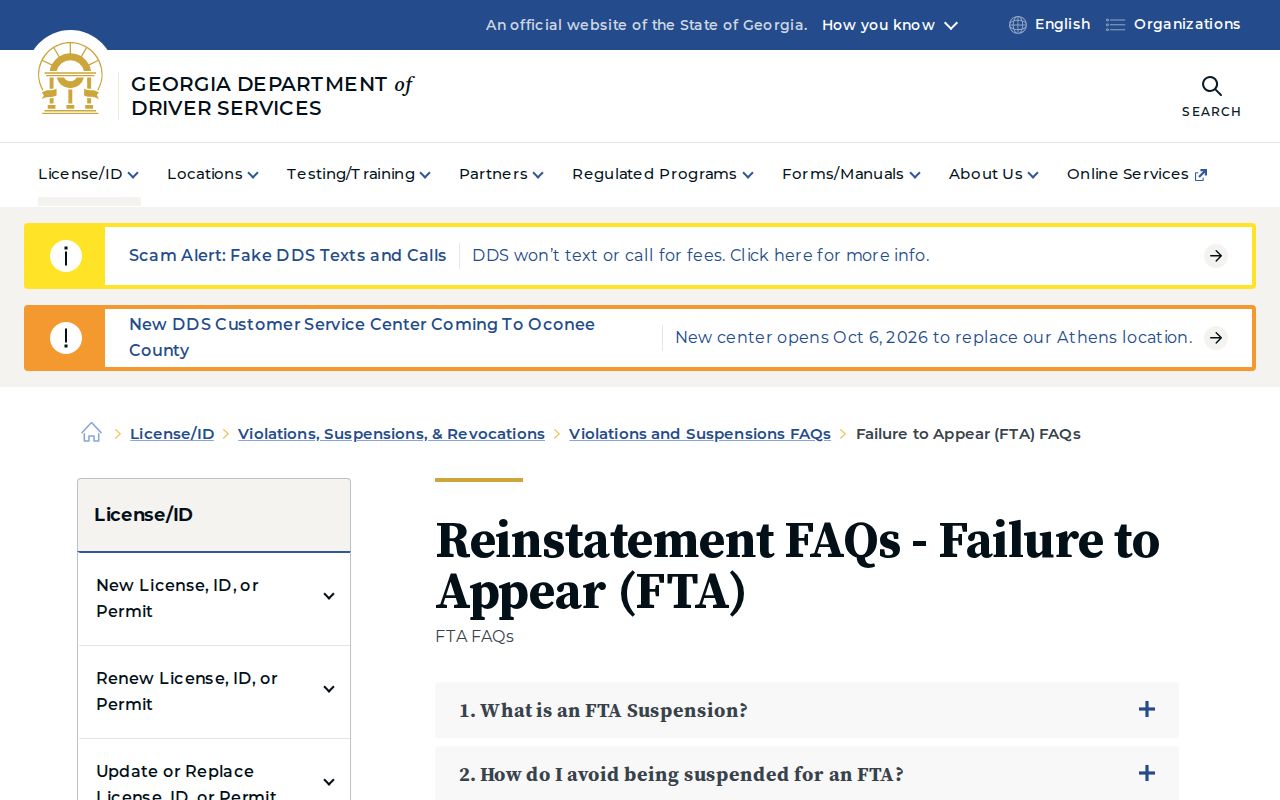
The official DDS material separates state license status from the Grady County court record.
How Traffic Warrants Trigger License Holds
A bench warrant is a court's arrest order. A failure to appear is the missed-setting event behind it, and a DDS suspension is the administrative result of the court's report in Grady County.
| Mechanism | Trigger | Controller |
|---|---|---|
| Traffic bench warrant | Court issues an order after missed court | Issuing Grady or city court |
| FTA | Required setting is missed | Issuing court |
| DDS suspension | DDS receives notice and time runs | Georgia DDS |
Keep proof until both records match.
Whigham Traffic Warrants Need Clerk Confirmation
Whigham's departments page says Recorder's Court now meets at the Grady County Courthouse in Cairo. City Hall stays the contact, at 126 East Broad Avenue, (229) 762-4215. Government Window offers a Traffic Tickets button, not a warrant answer. The vendor and the city page list different clerk names. Ask City Hall who holds the job now.
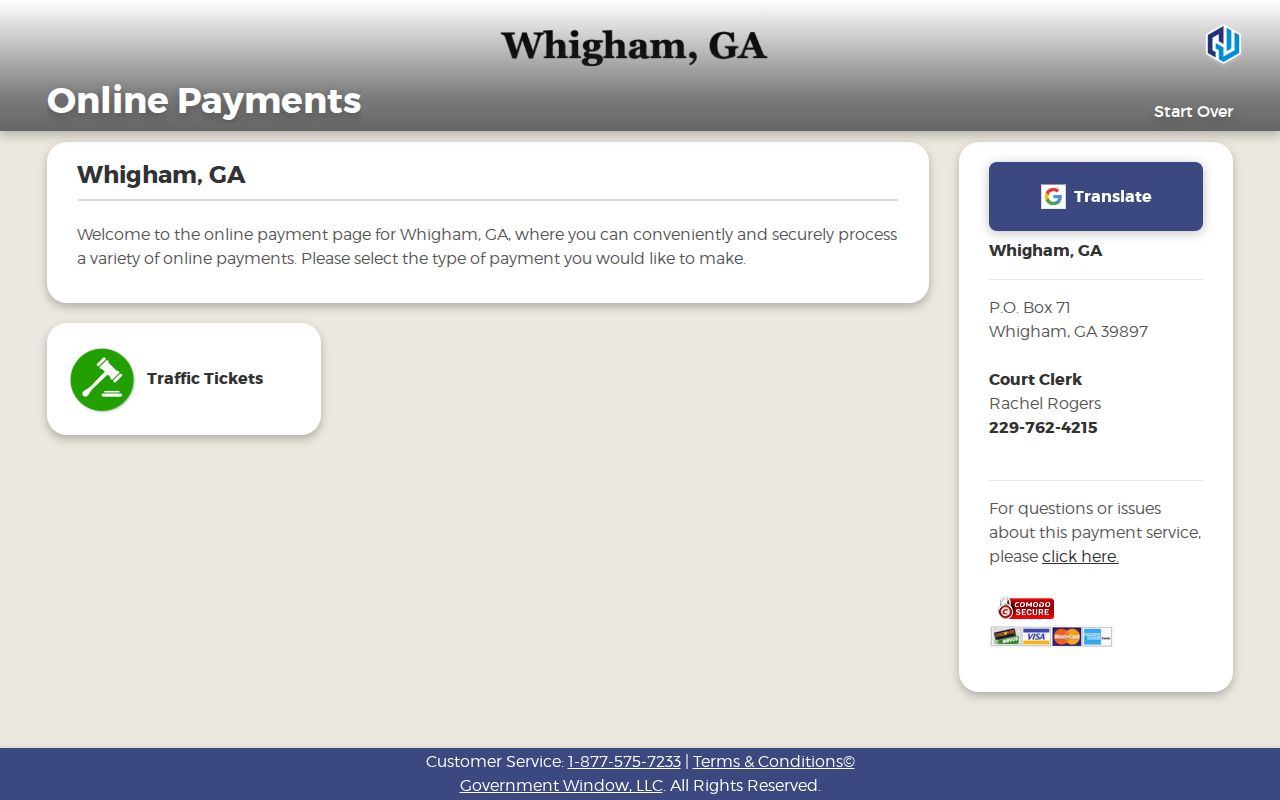
The city clerk, not the image or vendor, confirms whether a warrant remains active.
Grady Traffic Status Terms Matter
One Grady County citation can pick up several entries over its life. "Warrant issued" means a judge signed an arrest order. "Warrant served" records a later execution. "Recalled" means the court withdrew the order, and "satisfied" can mean a court obligation was completed. A "continued" setting simply moves the court date. Keep the court's exact words. Do not flatten them into "wanted," because the precise entry tells you far more.
- Bench warrant
- A court arrest order that may follow a missed required appearance.
- Failure to appear
- The missed setting or status that can lead to court and DDS action.
- Recall
- The issuing court's withdrawal of a warrant.
- Service return
- The filed record of what occurred when an officer acted on the warrant.
Status matters as much as the record itself in Grady County. A traffic file can show an issue date and a later return while the charge stays open. Ask the clerk for the last event date, the current warrant status, and the next setting. Keep your receipt or court order, since an old capture or third-party post can outlive the real court action.
Grady Open Records Are a Fallback
A written request fits a different job than a phone call. Callers get a quick status answer; the Georgia Open Records Act process gets them an actual copy. The Grady County sheriff's form asks you to describe the record you want, so be specific. Name the citation or case number, the date range, the court, and the product itself, whether that is a warrant return or a related arrest report. A vague plea to search every file only slows things down when the key identifiers are already known. Neither the sheriff's form nor the Grady County court pages publish a fee schedule, a copy price, or a promised completion time. Expect none of those numbers up front.
Also expect limits. Grady County can redact or withhold a record when an active investigation, a sealed matter, or a restricted juvenile file is involved. And remember what open-record production is not: it is not live status verification. The document tells you what the file holds. Whether a warrant remains active today is a question for the issuing court or the sheriff, asked directly, after the pages are in hand.